How do orthodontists create a treatment plan for each patient? They combine a clinical exam, X-rays, digital scans, photos, and your personal goals into one written plan that spells out the diagnosis, the appliance choice, the order of tooth movement, the visit schedule, and how long treatment should take. No two plans look alike, because no two smiles do.
What Is an Orthodontic Treatment Plan?
An orthodontic treatment plan is a written, documented guide to your smile journey. It records the diagnosis, the goals you and your orthodontist agree on, the appliances that will be used, the order teeth will be moved in, how often you’ll come in, and how your smile will be held in place afterward.
That plan is built from real information about your mouth: a hands-on exam, imaging, digital scans, and a conversation about what bothers you. It isn’t pulled from a template.
Every plan ends up unique because the details differ so much from person to person:
- Jaw size, shape, and how the upper and lower jaws relate
- Bite type, including overbite, overjet, crossbite, or open bite
- Growth stage, since a 9-year-old and a 39-year-old respond differently
- Habits like thumb sucking, mouth breathing, or tooth grinding
- Your own priorities, whether that’s crowding, spacing, or a specific tooth you’ve never liked
Two people can walk in with similar-looking front teeth and leave with very different plans.
The Step-by-Step Process Orthodontists Use to Build Your Plan
Building a plan follows a predictable order. Here’s how the process works from your first visit through the day treatment begins.
Step 1: What Happens at the free consult?
Your first free exam starts with a conversation. What brought you in? What do you want your smile to look like? Dr. Brady reviews your medical and dental history, then examines your teeth, gums, jaw joints, and bite. This is also when habits, past injuries, and previous braces come up.
Step 2: Which Records Get Taken?
Imaging fills in everything a visual exam on its own can’t show:
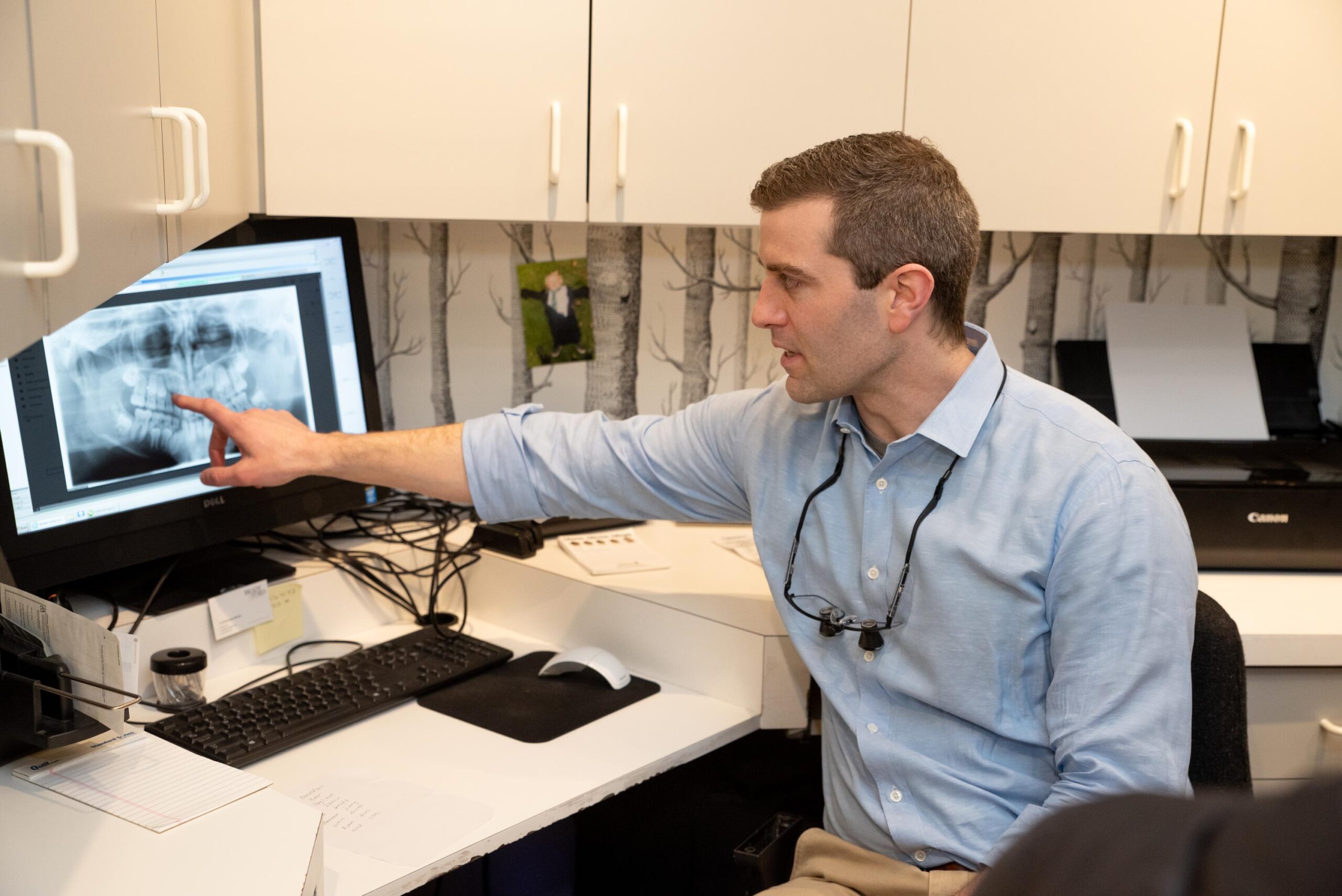
- Panoramic X-ray to see roots, developing teeth, and both jaws in one image
- Cephalometric X-ray to measure how the jaws, teeth, and profile relate to each other
- Photos of the face and teeth from several angles
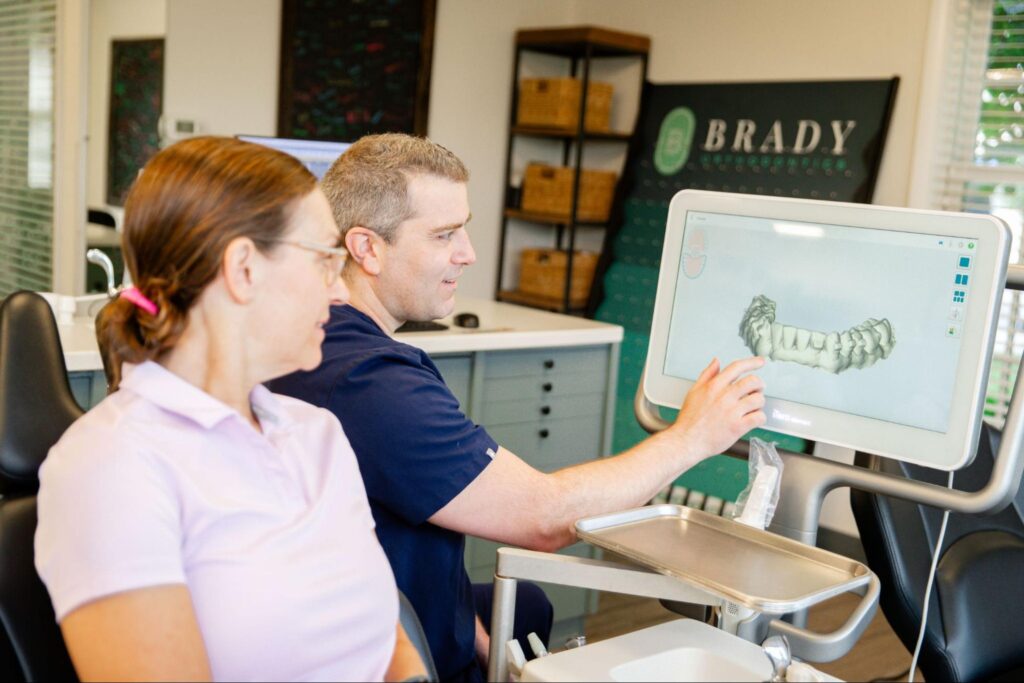
- Digital scans taken with a handheld scanner, no putty required
Step 3: How Is the Diagnosis Made?
Records get read together at this stage, and patterns start to line up. Crowding and spacing are the easy ones to spot. The bigger questions involve bite depth, overjet, crossbite, open bite, midline shifts, tooth eruption order, jaw alignment, and airway concerns. The diagnosis names the cause, not just the symptom.
Step 4: How Are Goals Set?
Good goals cover more than straight front teeth. Dr. Brady looks at how your teeth function together, whether the bite will stay stable long term, how your smile fits your face, and how easy your teeth will be to keep clean for decades. Your goals go on that list too. Say what bothers you, name the tooth you’ve been hiding in photos, and describe the smile you picture, and those answers shape the plan right alongside the clinical findings.
Step 5: How Are Appliances Chosen and Sequenced?
Diagnosis and goals in hand, Dr. Brady picks the tools. Metal braces, clear braces, clear aligners, an expander to make room for your new smile, elastics, retainers. Just as important is the order. Some movements have to happen before others, and sequencing them well keeps treatment shorter and more comfortable.
Step 6: How Is the Plan Presented and Approved?
Finally, you see the plan. Digital simulations show the expected movement, Dr. Brady explains the timing and compares your options side by side, and every question gets answered before anything goes on your teeth. Nothing starts until you say yes.
Who Builds the Plan?
Orthodontists are dentists first. Out of 100 dental school graduates, on average, only six go on to become orthodontists. Dr. Patrick Brady completed four years of college, four years of dental school, and two years of orthodontics residency, 11 years of training in total. He’s a board-certified orthodontist through the American Board of Orthodontics (ABO), a member of the American Association of Orthodontists (AAO) and the American Dental Association (ADA), and he teaches in the orthodontic residency program at UIC.
Why a Personalized Plan Delivers a Better Smile
Planning around the actual cause of a bite issue, rather than just the position of the front teeth, changes the whole experience. Here’s what a well-built plan does for you:
- Keeps treatment efficient. Targeting the underlying cause means fewer detours and less backtracking.
- Protects your teeth and gums. Controlling the amount of force and the order of movement is easier on enamel, gum tissue, and jaw joints.
- Improves function, not just looks. Chewing, speech, and daily brushing and flossing all get easier when the bite fits together.
- Sets clear checkpoints. You’ll know what month six should look like, so progress never feels like a mystery.
- Leaves room to adjust. Teeth sometimes move faster or slower than expected, and a documented plan makes mid-course changes simple instead of disruptive.
A new smile also gives you brand new confidence. That part shows up in photos long before anyone notices the technical details.
Digital Treatment Planning vs. Traditional Planning
Both methods start and end with the orthodontist’s diagnosis. What changes is how records are captured, how movement is visualized, and how quickly a plan can be revised. Digital tools give Dr. Brady more information and give you a much more comfortable appointment. Brady Orthodontics plans with digital records from the start, which means fewer repeat visits just to take new impressions and a much faster answer whenever something in the plan needs to shift.
| What’s Compared | Traditional Planning | Digital Planning |
|---|---|---|
| Records | Putty impressions, film X-rays | Intraoral digital scans, digital X-rays and photos |
| Comfort | Trays of putty held in the mouth | Handheld scanning wand, nothing to bite into |
| Visualization | Plaster models, hand measurements | 3D models with movement simulations you can watch |
| Customization | Wires and brackets adjusted by hand | KLOwen braces and custom-fit aligner trays |
| Revisions | New impressions and new models | The digital file gets updated |
| Record storage | Physical models on a shelf | Saved files, easy to compare over time |
Technology supports clinical judgment; it doesn’t replace it. A scanner can capture a perfect 3D model of crowded teeth, but only a trained orthodontist can tell you whether that crowding comes from tooth size, a narrow palate, or a jaw relationship that needs correcting first.
[IMAGE_SUGGESTION: Side-by-side comparison of a traditional plaster study model and a 3D digital tooth model on screen]
What Affects the Complexity of a Treatment Plan
Treatment complexity varies widely from patient to patient. Correcting mild front-tooth crowding calls for fewer appliances, fewer visits, and less chair time than correcting a skeletal bite issue or guiding an impacted tooth into place. Appliance type, treatment length, growth stage, and whether other providers are involved all shape how involved your plan will be.
| Factor | Simpler Plans | More Involved Plans |
|---|---|---|
| Case type | Mild crowding or spacing | Skeletal bite correction, impacted teeth, missing teeth |
| Appliances | One set of aligners or braces | Braces plus expander, elastics, or additional appliances |
| Treatment length | Shorter course of care | Longer course with more adjustment appointments |
| Growth stage | Interceptive treatment in a growing child | Adult mechanics with no growth to work with |
| Team involved | Brady Orthodontics only | Coordination with your general dentist or an oral surgeon |
Your plan gets reviewed with you in plain language at your free consult, before you commit to anything.
Who Needs a Custom Treatment Plan?
Anyone starting a smile journey needs a plan built for their own mouth. Certain situations make that individual attention especially important:
- Children around age 7. The American Association of Orthodontists (AAO) recommends a first orthodontic evaluation by around age seven, and Dr. Brady follows that widely accepted guideline, since crowding, crossbite, or a narrow palate can be spotted early.
- Teens. The years between 12 and 16 are the most common time for treatment, because most permanent teeth are in place and ready for braces or clear aligners.
- Adults. Shifting after previous braces, uneven wear, spacing, or gum changes all call for a fresh diagnosis rather than a repeat of an old plan.
- Anyone with bite trouble. Jaw discomfort, clicking, difficulty biting through food, or breathing and airway concerns deserve a full workup.
- Aligner candidates. If you’re considering clear aligners, a plan confirms whether they’ll reach your goals before you start.
Brady Orthodontics welcomes children, teens and adults, and every one of them gets their own plan.
Frequently Asked Questions About Orthodontic Treatment Plans
How long does it take to get a treatment plan?
Most plans are presented at the first free exam or shortly afterward. Straightforward cases are often diagnosed and discussed the same day. More complex cases may need extra time to study the records, and you’ll be given a specific follow-up so you’re never left waiting and wondering.
Do I need X-rays for a treatment plan?
Yes. Imaging shows what an exam can’t: root length and angle, unerupted or impacted teeth, bone levels, and how the upper and lower jaws relate. Planning tooth movement without X-rays would mean guessing about everything below the gumline. Digital X-rays keep exposure low and give clear images right away.
Can a treatment plan change mid-treatment?
Absolutely, and that’s normal. Teeth are biological, so some respond faster than predicted and others need more time. Dr. Brady reviews your progress at each adjustment appointment and adapts the plan when your teeth call for it. Small course corrections along the way are a sign of attentive care.
Can I choose between braces and aligners?
Often, yes. When metal braces, clear braces, and clear aligners can all reach the goals in your diagnosis, the choice comes down to your lifestyle, your habits, and how visible you want treatment to be. Some bite corrections do work better with one option, and Dr. Brady will tell you honestly if that’s your situation.
Is the consult free?
Yes. Brady Orthodontics offers a free consult, including the exam and a review of your options. Getting started is easy! You’ll leave knowing your diagnosis, your choices, and what treatment would involve, with no obligation to move forward.
How accurate are digital treatment simulations?
Simulations are predictive, not a promise. They’re built on precise measurements and reliable modeling, so they give a strong preview of where your teeth are headed. Biology still varies from person to person, which is why your plan gets checked and adjusted throughout treatment rather than set once and forgotten.
Your plan should be built around your mouth, your goals, and your schedule. Dr. Brady and our friendly & fun team will walk you through the diagnosis, show you the simulation, and answer every question before anything begins.
Brady Orthodontics welcomes children, teens and adults who are ready to dream big. smile big. Schedule a free consultation whenever you’d like to see what your dream smile could look like, and you’ll leave with a clear picture of the plan built around you.