Evanston Orthodontist: Braces & Clear Aligners for Every Age
An Evanston orthodontist straightens teeth and corrects bites with braces, clear braces and clear aligners. At Brady Orthodontics, Dr. Patrick Brady is a board-certified orthodontist treating children, teens and adults across Evanston and the North Shore, with a free consult that includes a full exam, digital X-rays and digital scans.
An Evanston orthodontist is a dental specialist who straightens teeth and corrects bites after completing two extra years of residency beyond dental school. General dentists handle cleanings, fillings and overall oral health. Orthodontists focus only on tooth movement, jaw growth and bite alignment using braces, clear aligners and other appliances.
At Brady Orthodontics, Dr. Patrick Brady is a board-certified orthodontist serving Evanston, Winnetka and the surrounding North Shore communities. Orthodontists are dentists first, and specializing takes additional residency training that most dental school graduates never pursue. Dr. Brady completed 11 years of training to earn that title.
Choosing an Orthodontist in Evanston: What to Know
Picking the person who will move your teeth for the next year or two deserves a little homework. Training, technology and who you actually see at each visit tell you most of what you need to know, and a few direct questions sort out your options quickly.
Is the doctor a board-certified orthodontist? Certification through the American Board of Orthodontics is voluntary. Earning it means submitting finished cases for review by other specialists. Dr. Brady holds that certification, and he's a member of the American Association of Orthodontists and the American Dental Association.
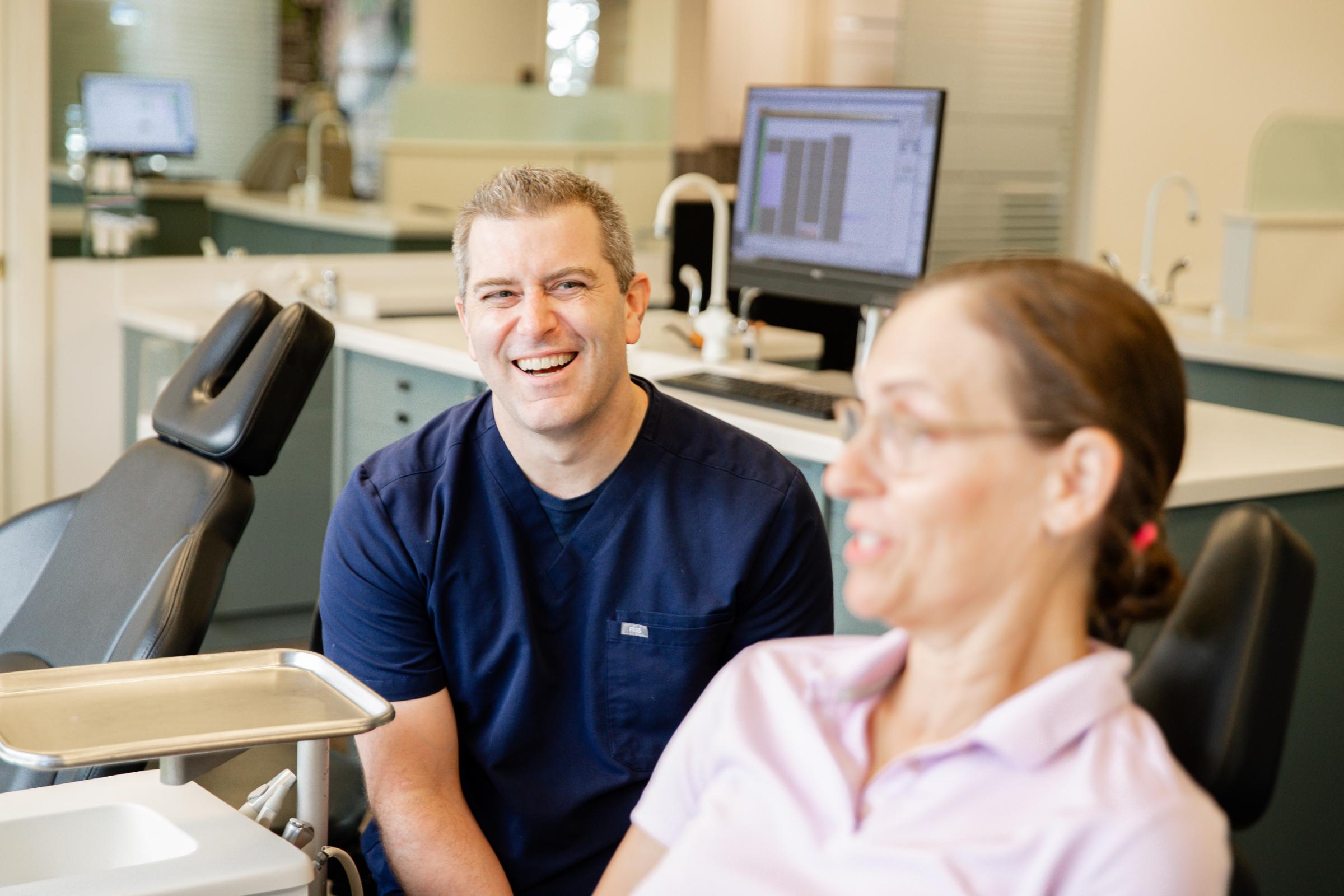
Who treats you at each appointment? In some offices, most of the chair time belongs to assistants. Brady Orthodontics is a single-doctor practice, so you'll interact personally with Dr. Brady at every visit, from your first free exam through your final retainer check.
What technology is used? State-of-the-art tools shorten treatment and make it more comfortable. We use digital scans instead of goopy trays, digital X-rays and photos for planning, and KLOwen braces designed around each patient's individual tooth anatomy.
Does the practice treat your age group? We see children, teens and adults, which matters for families who'd rather handle everyone's care in one place. A parent in clear aligners and a fourth grader in an expander can share the same appointment window.
How convenient is the location? Treatment means regular visits over many months. Two offices, one in Evanston and one in Winnetka, plus flexible appointment times, keep braces and clear aligners from taking over your calendar.
What happens at the first visit? At Brady Orthodontics, your first free exam includes records, a diagnosis and a written plan. No referral needed to book it.
Ask about teaching and continuing education, too. Dr. Brady teaches in the orthodontic residency program at the University of Illinois Chicago, which keeps him close to current research and newer techniques. When you're comparing offices, trust your read on the team as well. You'll be seeing them often, and friendly & fun goes a long way over 18 months of appointments.
Treatment Options at a Glance
Every smile is different, so we plan around your teeth, your bite and your goals. Here's what we offer:
- Metal braces: KLOwen custom brackets and NiTi shape-memory wires for precise control over complex movements
- Clear braces: Tooth-colored brackets that blend in for a subtle treatment, straighter smile
- Clear aligners: Removable, nearly invisible trays for mild to moderate correction
- Palatal expanders: Growth-guiding appliances that make room for your new smile during childhood
- Retainers: Fixed and removable options that keep your smile for a lifetime
Care for Children, Teens and Adults
We treat children, teens and adults at both of our locations. The American Association of Orthodontists and Dr. Brady recommend a first orthodontic evaluation by around age seven, when enough permanent teeth have come in to spot developing bite issues.
Teens between 12 and 16 are a common age for treatment, since most permanent teeth are in place by then. Adults are a growing part of our practice, and many choose clear aligners or clear braces so treatment blends into the workday.
What Your Free Consult Includes
Getting started is easy! Your first free exam at Brady Orthodontics covers:
- A clinical exam of your teeth, bite and jaw
- Digital X-rays, photos and digital scans (no goopy trays)
- A review of your records with Dr. Brady
- A written treatment plan with timing
- Time to ask every question on your list
No referral is required, and there's no obligation to start.
Metal Braces in Evanston: How They Work and Who They Suit
Metal braces work by applying light, continuous pressure to each tooth so it travels into a planned position over a series of small steps. Three parts work together: brackets bonded to each tooth, an archwire that runs through them, and elastics that hold everything in place. The wire applies gentle, steady pressure that shifts teeth into position in stages. Dr. Brady adjusts that pressure over time until your bite and alignment are right.
At Brady Orthodontics, we use KLOwen braces, a custom bracket system designed around your individual tooth anatomy rather than a one-size-fits-all prescription. Those brackets pair with NiTi shape-memory wires, which want to return to their original shape and keep working steadily between visits. The result is constant force in the right direction, which means less time in braces and more comfort along the way, without old-fashioned adjustment appointments that rely on tightening.
Who Metal Braces Work Best For
Fixed braces give an orthodontist the most control, which makes them a strong choice for:
- Significant crowding or rotated teeth
- Bite correction, including overbites, underbites and crossbites
- Closing larger gaps between teeth
- Cases where teeth need to move in more than one direction at once
- Younger patients who'd rather not manage removable trays
Timeline and Appointments
Most treatment plans fall in the 12 to 30 month range, depending on how much movement is needed. Simple alignment finishes faster. Bite correction and jaw growth guidance take longer.
You'll see us every 6 to 10 weeks for adjustments. At every visit, you'll interact personally with Dr. Brady, so there's always time to ask a question, raise a concern or share a laugh. Kids and teens get to pick new elastic colors at each visit, which is easily the most debated decision of the appointment.
Caring for Braces at Home
Good hygiene protects your enamel while brackets are on. A few habits make it simple:
- Brush after every meal, angling the brush above and below each bracket
- Use an interdental brush to clean between brackets and under the wire
- Floss daily with a threader or water flosser
- Skip hard foods like ice, nuts and hard candy
- Skip sticky foods like caramel, taffy and gum
- Cut apples, carrots and corn on the cob into smaller pieces
Plaque is a sticky, colorless film made of bacteria, food and saliva. It builds up faster around brackets, so a few extra minutes of brushing each day pays off in a big way.
 a teen patient]
Clear Braces: A Discreet Fixed Option
Clear braces use tooth-colored brackets that blend in with your natural enamel. They work exactly like metal braces, with an archwire and elastic ties moving teeth in stages, but they're far less noticeable in photos and conversation. They're not entirely invisible, though most people won't spot them from across a room.
This option suits adults and older teens who want the reliability of fixed treatment without a metal look. Because the brackets stay on your teeth, there's no wear-time responsibility and no risk of forgetting to put trays back in.
Clear Braces vs. Metal Braces
| Feature | Metal Braces | Clear Braces |
|---|---|---|
| Visibility | Noticeable | Blends with tooth color |
| Durability | Highest strength | Strong, slightly more fragile |
| Treatment time | 12-30 months typical | Generally comparable |
| Staining risk | Brackets don't stain | Elastic ties can pick up color |
| Best for | Complex bites, kids and teens | Adults and older teens |
Keeping Clear Braces Looking Clear
The brackets themselves resist staining. The small elastic ties around them can pick up color from strongly pigmented foods and drinks between visits. To keep everything looking fresh:
- Rinse with water after coffee, tea, red wine or cola
- Go easy on curry, tomato sauce and dark berries
- Brush thoroughly twice a day, more often after meals
- Skip whitening toothpastes with heavy abrasives
- Know that ties are replaced at each adjustment appointment, so any tint is temporary
Dr. Brady will let you know at your free consult whether clear braces can handle your specific bite. For most alignment and mild to moderate bite issues, they can.
Clear Aligners in Evanston for Teens and Adults
Clear aligners are removable, custom-fit plastic trays worn 20 to 22 hours a day and swapped for the next set on the schedule Dr. Brady sets. Each tray moves teeth a small amount. They suit teens and adults with mild to moderate crowding, spacing or relapse. You take them out to eat, brush and floss, then put them right back in, and the series gradually shifts your smile into alignment.
Clear aligners from Brady Orthodontics can give you the straight smile you want without anyone noticing you're in treatment.
How the Process Works
- Free consult: Dr. Brady examines your teeth and bite and confirms aligners are a good fit
- Digital scans: A handheld scanner captures your teeth in minutes, no impression material required
- Plan approval: You'll see a digital preview of how your teeth will move before treatment starts
- Tray wear: You wear each set as directed and check in with us periodically
- Refinements: Small adjustments at the end fine-tune the details
- Retainer: A retainer locks in your dream smile
Cases Aligners Handle Well
Clear aligners are a strong option for:
- Mild to moderate crowding
- Spacing and small gaps
- Relapse after previous braces
- Mild bite corrections
- Adults who want an option most people won't notice
More complex rotations, significant bite correction and cases needing precise root control usually do better with fixed braces. Dr. Brady will tell you honestly which route gets you the best outcome.
Wear Time Is Everything
Aligners only move teeth while they're in your mouth. Trays that spend the day in a backpack or a purse pocket don't do anything. If a teen tends to forget, braces may be the better call, and that's a completely normal conversation to have at your first free exam.
Why Patients Choose Aligners
- Removable for meals, so there are no food restrictions
- Easier brushing and flossing with nothing bonded to your teeth
- No brackets or wires to irritate cheeks and lips
- Simple to take out for a game, a performance or a photo
- Smooth trays that feel comfortable within a day or two of each change
Palatal Expanders and Interceptive Treatment for Children
A palatal expander is a small appliance fitted to the upper back teeth that gently widens the upper jaw while a child is still growing. The two halves of the palate haven't fused yet in young children, so steady, gentle pressure creates width. That extra space corrects crossbites, relieves crowding and makes room for permanent teeth to come in straight.
Why Age Seven Matters
The American Association of Orthodontists recommends a first orthodontic evaluation by around age seven. By then, the first permanent molars and front teeth have usually come in, which lets Dr. Brady see how the bite is developing.
An early visit doesn't always lead to early treatment. Often it means we simply monitor growth and start at the ideal moment.
Signs Interceptive Treatment May Help
Schedule a free consultation if you notice:
- A crossbite, where upper teeth bite inside the lower teeth
- Crowding or teeth erupting in odd positions
- Losing baby teeth much earlier or later than siblings did
- Mouth breathing or noisy nighttime breathing
- Thumb sucking past age five
- Jaw shifting to one side when biting down
- Trouble chewing or biting through food
What Parents Can Expect
Most expanders stay in place for several months of active widening, followed by a stabilizing period so new bone can fill in. After that, some kids go straight into braces, while others wait for more permanent teeth. Here's what the first week usually looks like:
- Activation: You'll turn a small key at home on a schedule Dr. Brady gives you, usually just seconds a day
- Pressure: Your child may feel light pressure behind the nose after each turn, which fades quickly
- Speech: A slight lisp is normal and typically clears up within a week of talking and reading aloud
- Eating: Soft foods for the first day or two make things easier
- A gap: A space may open between the front teeth. That's a sign the expander is working, and it closes on its own
Interceptive treatment guides growth rather than fighting it later, which can simplify or shorten a second phase of treatment down the road.
Retainers and Keeping Your Results After Treatment
Retainers hold your teeth in their new positions after braces or clear aligners come off. Teeth naturally drift over time, and the bone and ligaments around them need months to settle. Wearing a retainer as directed is the single best way to keep your smile for a lifetime and avoid relapse after all that work. Every Evanston patient finishes treatment with a retainer plan Dr. Brady walks through in person.
Types of Retainers
| Type | How It Works | Best For |
|---|---|---|
| Fixed bonded wire | Thin wire bonded behind front teeth | Patients who want zero daily effort |
| Clear removable | Custom tray that fits over teeth | Discreet nighttime wear |
| Hawley | Acrylic plate with a visible wire | Durability and small adjustments |
Dr. Brady recommends the type that matches your case, and some patients use a combination of fixed and removable.
Typical Wear Schedule
Most patients start with full-time wear, taking retainers out only to eat and brush, until Dr. Brady instructs otherwise. After that settling period, wear usually shifts to nights only. That nightly habit continues long term, because retention is lifelong maintenance rather than an optional add-on.
Care and Troubleshooting
- Rinse removable retainers in cool water every time you take them out
- Brush gently with a soft toothbrush and mild soap, not hot water
- Store them in the case, never in a napkin (napkins get thrown away)
- Keep them away from dogs, who consider retainers a delicacy
- Floss under a bonded wire daily with a threader
If a retainer cracks, warps or goes missing, call Brady Orthodontics right away and keep wearing the old one if it still fits. Teeth can shift within days, so a quick replacement protects your dream smile.
Braces vs. Clear Aligners: Comparing Your Options
Most Evanston patients walk into the free consult already leaning one direction. There's no universally "best" option. There's only the best option for your teeth, your bite and your daily life.
| Factor | Metal Braces | Clear Braces | Clear Aligners |
|---|---|---|---|
| Visibility | Most noticeable | Subtle | Nearly invisible |
| Removable | No | No | Yes |
| Case complexity | Handles the most complex cases | Mild to moderate, some complex | Mild to moderate |
| Wear responsibility | None, they're always working | None | High, 20-22 hours daily |
| Hygiene | Requires extra brushing tools | Requires extra brushing tools | Easiest, brush normally |
| Food restrictions | Yes | Yes | None |
| Typical visits | Every 6-10 weeks | Every 6-10 weeks | Periodic check-ins |
Matching the Option to the Case
Complex bites, significant rotations and jaw discrepancies generally call for fixed braces, where Dr. Brady controls every movement. Mild crowding, spacing and relapse after previous treatment are often ideal for aligners.
Lifestyle Factors Worth Mentioning
Bring these up at your free consult, because they genuinely affect the recommendation:
- Contact sports: Braces work fine with a mouthguard, and aligners come out for games
- Wind instruments: Musicians often prefer aligners or need a short adjustment period with braces
- Work and presentations: Clear braces and aligners keep treatment low-profile
- Frequent travel: Braces need fewer daily decisions, while aligners need a disciplined routine
- Younger kids: Fixed braces remove the remember-to-wear-it factor entirely
Dr. Brady makes a recommendation only after a clinical exam and a full set of records. We take pride in truly listening to your goals and collaborating with you to create the perfect plan to get your dream smile.
Why Choose Brady Orthodontics as Your Evanston Orthodontist
Credentials matter when someone is moving your teeth. Here's what stands behind every treatment plan at Brady Orthodontics:
- Board certification: Dr. Brady is certified by the American Board of Orthodontics, a voluntary credential earned through rigorous case review
- Professional memberships: He's a member of the American Association of Orthodontists and the American Dental Association
- 11 years of training: Four years of college, four years of dental school and two years of orthodontics residency
- Teaching role: Dr. Brady teaches in the orthodontic residency program at the University of Illinois Chicago, helping train the next generation of specialists
- State-of-the-art tools: Digital scanners, digital X-rays and photos, KLOwen custom braces and NiTi shape-memory wires
- Two convenient locations: Offices in Evanston and Winnetka with flexible appointment times
You can also see the work for yourself. Our before and after gallery shows finished dream smiles from real patients, and reviews from Evanston and Winnetka families describe, in their own words, what care here actually feels like day to day.
Dr. Brady plans every case himself, explains his reasoning in plain language and sits down with you at each appointment. That hands-on approach is how he keeps local families smiling for life.
Frequently Asked Questions About Orthodontic Care in Evanston
How long does orthodontic treatment take?
Most treatment falls in the 12 to 30 month range. Minor alignment or relapse cases can finish considerably faster, while bite correction and growth guidance in children take longer. Your wear-time habits also matter with clear aligners, since trays only move teeth while they're in your mouth.
At what age should my child see an orthodontist?
The American Association of Orthodontists and Dr. Brady recommend a first orthodontic evaluation by around age seven. By then, enough permanent teeth have come in to reveal developing crossbites, crowding and jaw growth concerns. Most kids who come in at seven don't start treatment right away. We simply monitor growth and begin at the ideal time.
Do I need a dentist referral to book a consultation?
No referral is required. You can schedule a free consultation at Brady Orthodontics directly, whether your dentist suggested an orthodontic opinion or you noticed something yourself. We're happy to coordinate with your general dentist so everyone stays on the same page about your care.
Are clear aligners as effective as braces?
For mild to moderate crowding, spacing and relapse, clear aligners produce excellent alignment when worn 20 to 22 hours a day. Braces give an orthodontist more control over complex rotations, significant bite correction and root positioning. Dr. Brady will tell you which option delivers the best outcome for your specific case after examining your teeth and records.
What happens if a bracket comes loose or a wire pokes?
Real orthodontic emergencies are rare, but small issues do happen. A poking wire can usually be tucked down with a pencil eraser and covered with orthodontic wax until we see you. Call Brady Orthodontics for a loose bracket, and we'll get you in for a quick repair.
Orthodontic Resources and Next Steps
A little preparation makes your first visit smoother and more productive.
Helpful Sources
- The American Association of Orthodontists (aaoinfo.org) offers parent guides, treatment overviews and answers about specialist training
- The American Dental Association (mouthhealthy.org) covers daily hygiene basics for every age
- Our own care instructions cover brushing with braces, aligner wear and retainer maintenance
What to Bring to Your First Free Exam
- Your dental insurance card
- Recent X-rays or records from your general dentist, if you have them
- A list of questions and smile goals
- Any medical history relevant to your care
Quick Emergency Guidance
- Loose bracket: Leave it in place if it's still attached to the wire, cover with wax, and call us
- Poking wire: Tuck it with a clean pencil eraser and apply wax over the end
- Soreness after adjustments: Stick with soft foods and rinse with warm salt water. This is normal and short-lived
- Lost aligner: Go back to your previous set and call us before your next scheduled change
- Lost or broken retainer: Call right away, because teeth start shifting within days
Schedule a Free Consultation with Brady Orthodontics
Ready to see what's possible? Your free consult with Dr. Brady includes a full exam, digital X-rays, photos and digital scans and a walk-through of your treatment options. You'll leave knowing exactly what your smile journey looks like and how long it takes.
No referral needed. No obligation. Just straight answers from a board-certified orthodontist who'll be the one treating you at every appointment.
Our Evanston and Winnetka offices welcome children, teens and adults from across the North Shore, with flexible appointment times that work around school and work schedules.
Call (847) 446-2245 or book your free consult online at bradyortho.com/free-consult. Our Evanston office is located at 2935 Central St., Evanston, IL 60201, and our Winnetka office is located at 575 Lincoln Ave., Winnetka, IL 60093.
Dream big. Smile big.